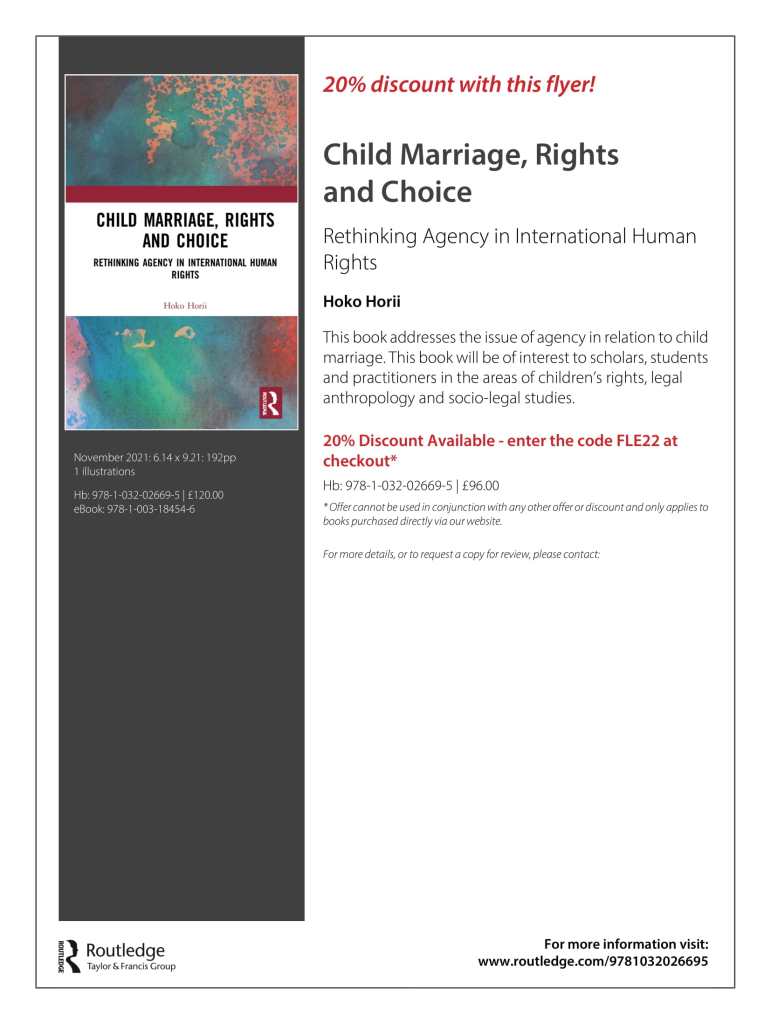
Child Marriage, Rights and Choice: flyer with a discount code :)

堀井穂子

With my colleague/friend I attended an event “Rebel like Simone de Beauvoir: How to live an authentic life?“. There was a lot to take away from/reflect on, about the idea of authenticity in relation to freedom, connections, oppression, and social norms.
Authenticity is the continuous process of creating one’s own essence. It’s not about discovering who you are, but intentionally choosing who you become. And this you don’t do it alone, but by engaging with others. By being an authentic human being, we are also participating in shaping the context in which others exercise their choices. No one can be realized without through others.
To be human is to be in perpetual dissatisfaction because there is always a gap between who we are and who we want to become. We keep questioning ourselves – this way we are always ‘becoming’.
Authentic love is mutual recognition of two being. Life is a tension between bring for ourselves and being for others. Two persons inter-subjectively discuss and decide what works for them, regardless of what the society says. It is an authentic relationship as long as the two are freely committed.
To rebel is to push back oppressive values and structures, which is something outside us that try to determine how we should behave, what we should do etc. De Beauvoir would tell us: Write your own script. Live your authentic life with compassion, friendship, and love. Think with me, not not necessarily like me.
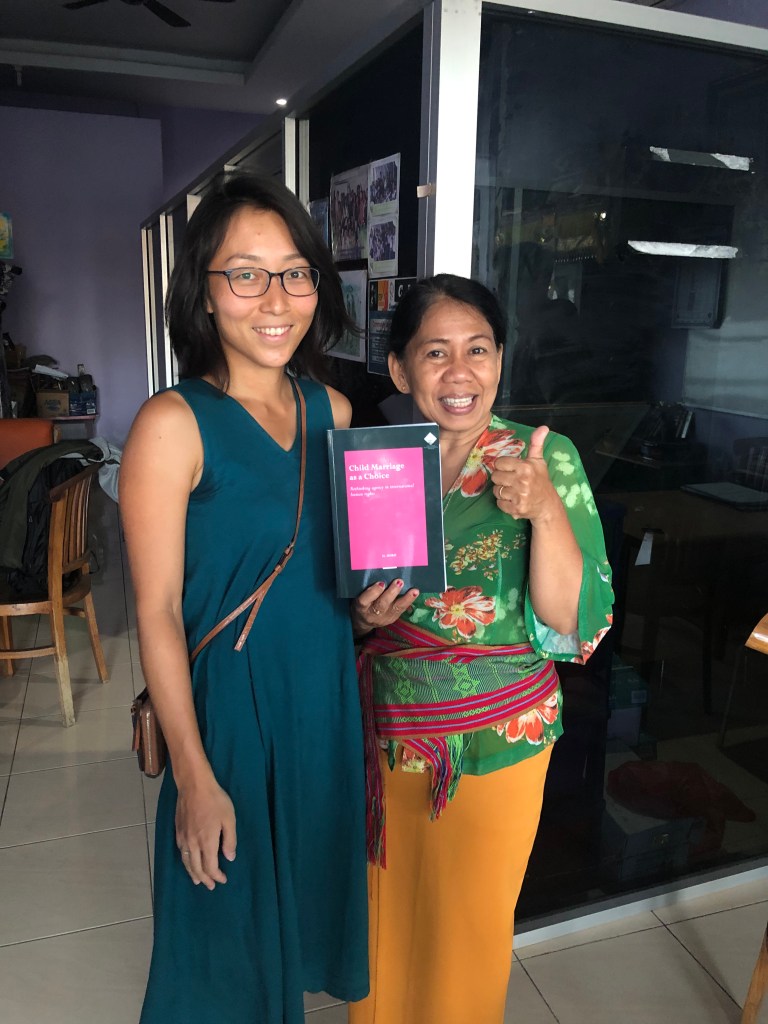
For the first time since 5 years, I was in Indonesia again. In Bali, where I spent 6 months in 2017 for my fieldwork, I met my colleagues, friends, and people who I interviewed for my research on child marriage. Meeting again with the amazing lawyers who work at LBH Apik (local legal aid association) and activists who work for children’s and women’s rights issues re-motivated me to link my academic work to these activists’ social missions. And meeting now-grown-up women and men who I interviewed 5 years ago a ‘child bride/groom’, convinced me further in my believe that we should think of their agency in a new way – the way differs from the currently widespread paternalistic and protectionist one.
After Bali I went to Aceh, for the first time, to meet my PhD student who is doing her fieldwork in a remote village/island. What beautiful untouched islands, a fascinating location for ethnographic research on customary law and access to justice! Grateful & happy to be working with Nanda Amalia as her PhD supervisor!
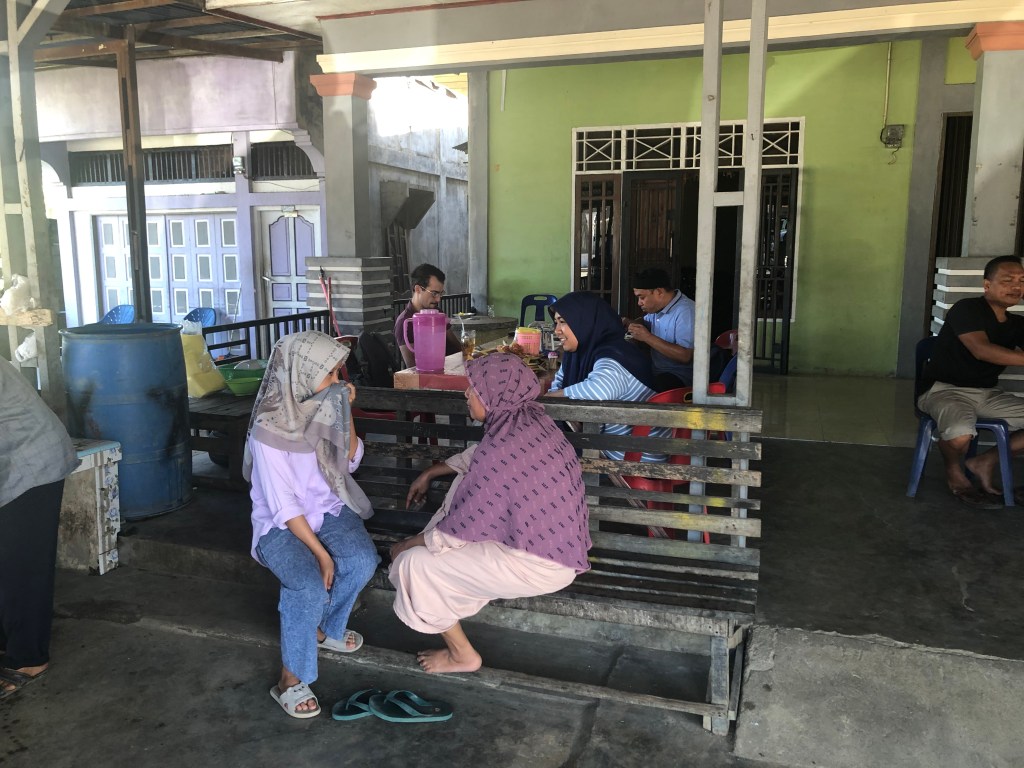
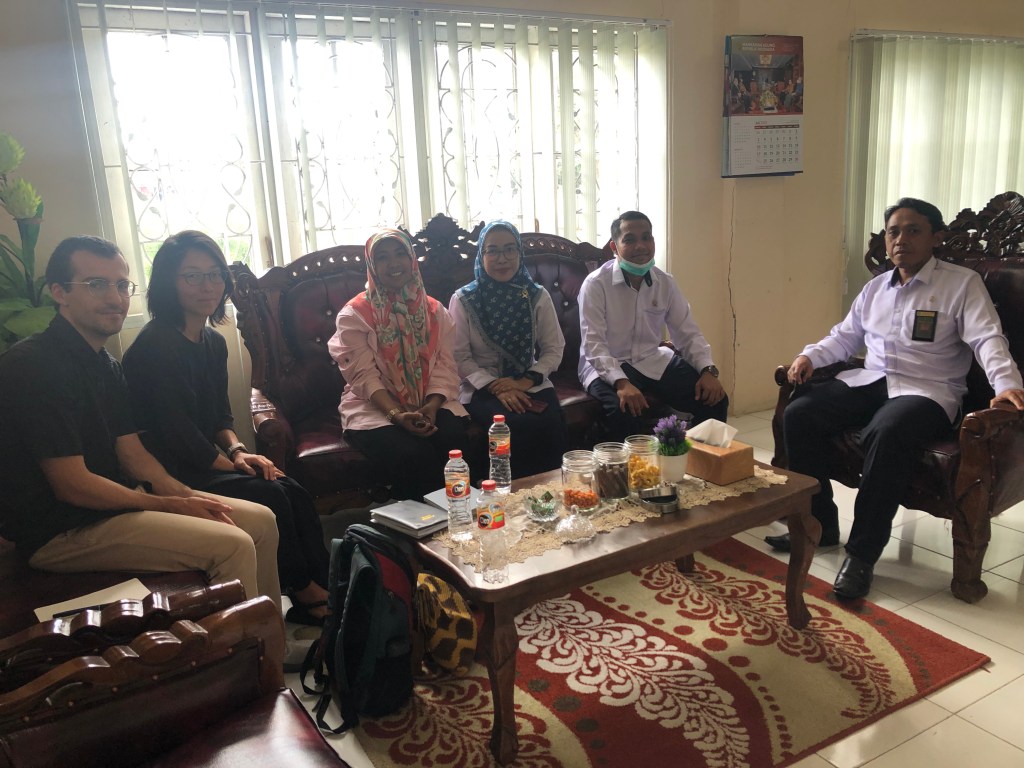
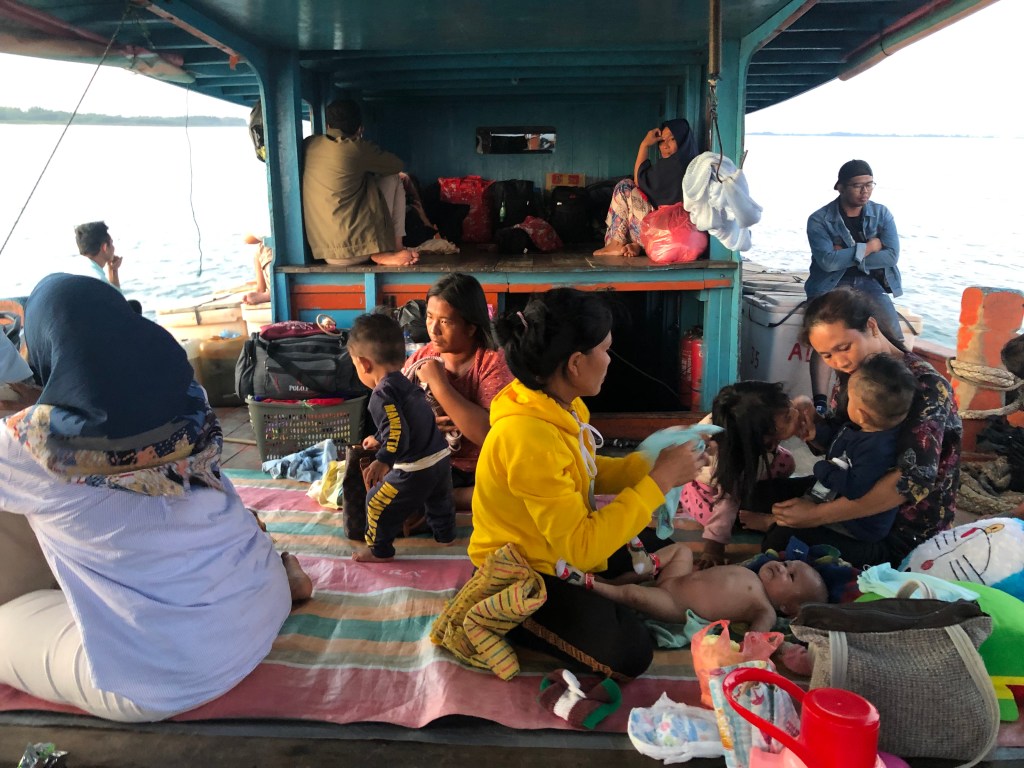
Until next time, beautiful Indonesia!
Dates and Location:
Wednesday 28 and Thursday 29 September 2022. McGill Law Faculty – Centre for Human Rights and Legal Pluralism
Rationale and aims:
Maximizing human agency and freedom is one of the core values of the international human rights project. The concept of ‘agency’ is anchored in general and, in particular, in specialised international human rights instruments that seek to protect and empower specific marginalised groups (e.g., children, women, indigenous people, refugees, people with disabilities). It is generally understood to be central to the recognition of such groups as subjects of a special set of rights, and with the recognition of subjectivity comes the recognition of all human to act and make decisions on their own behalf.
Despite this ambition, empirical research has exposed patterns of ‘selective agency’, meaning that a subject’s agency is often only recognized and taken seriously when it is considered as the ‘right kind’ by more powerful custodians and implementers of international human rights norms. When persons exercise the ‘wrong kind’ of agency – for instance to engage in sex work, ‘harmful’ traditional practices, child marriage etc. – they are often dismissed for being forced, manipulated, or as being stuck in a false consciousness. In other words, when it comes international human rights, it appears that the recognition of ‘agency’ is generally constraint by the normative parameters of the different instruments, with the result that many remain on the margins of human rights praxis.
This seemingly contractionary practice is indicative of a lack of understanding about how agency is currently conceptualized and about what it actually constitutes in the operationalization of international human rights instruments. It is the aim of this workshop to address this problem, guided by the following set of questions:
Format:
The workshop will take place over two days and will bring together six invited scholars from various disciplines who share a keen interest in agency and/or human rights. Each participant will be asked to select one paper or chapter (written by themselves or by another) which relates (empirically, theoretically or methodologically) to the workshop’s theme and questions, and which will be read by all beforehand. Each participant will give a 10min exposé relating to their respective paper, followed by a 30min discussion between all participants. The workshop will end with a general discussion and theorisation of the insights gained from the different presentations and discussions, and will explore potential follow-up projects (e.g., a special issue, edited volume, conference etc.).
Organisers:
Hoko Horii is a lecturer at the VanVollenhoven Institute (VVI) of the Leiden University and specialises in socio-legal studies, legal philosophy, human rights law, and children’s rights.
Edward van Daalen is a postdoctoral fellow at the Centre for Human Rights and Legal Pluralism (CHRLP) of the McGill University, where he works on the intersections of international law and policy making, children’s rights and international development.
https://www.cambridgelawreview.org/dlf-volume-iv
My former student Margarita Avramtcheva, now working at the Ministry of Foreign Affairs in the Netherlands, has just published the article based on her thesis that I have supervised together with Erik Herber. The article examines and evaluates the role of “Prosecution Review Commission” – a unique watchdog institution in the Japanese criminal justice system. Check out “Who Will Watch the Watchmen? Evaluating the Prosecution Review Commission in Japan” from the link above! the Prosecution Review Commission in Japan! Also in tender memory of Erik Herber.
 Hoko Horii