
About Me
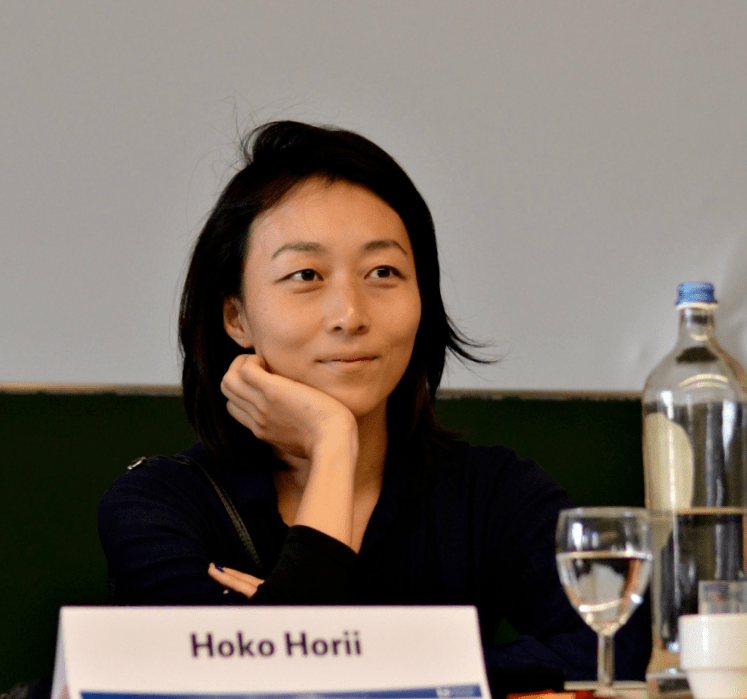
I work as assistant professor at the VanVollenhoven Institute for Law, Governance and Society (Leiden Law School).
Research and Writing: Asking questions is a daring quest of understanding. Research and writing is sharing the process with others, an expression to the world. I want to initiate, and be a part of this collective creation of knowledge.
My expertises lie in the field of socio-legal studies, legal philosophy, human rights law, and children’s rights. Combining knowledge from these fields, my research interest concentrates on law, rights and righteousness. How does law stipulate ‘rights’, and for whom are they just and fair and for whom are they not just and fair)? How does law reflect, influence, reinforce, and control our sense of ‘righteousness’? I address these questions particularly in laws regulating intimate relationships, using concrete case studies over different projects. I observe court cases with my own eyes, and I interview legal practitioners, social activists, youth and others.
I defended my dissertation, called Child Marriage as a Choice: Rethinking agency in international human rights, at Vanvollenhoven Institute for Law, Governance and Society, Leiden University & the Royal Netherlands Institute of Southeast Asian and Caribbean Studies (KITLV), The Netherlands. My monograph Child Marriage, Rights and Choice has been published by Routledge. In this book, I demonstrate and discuss different understandings of agency, and how they relate to our individual and societal conception of ‘righteousness’. International human rights framework grant children and women ‘agency’ – but only when they do the ‘right thing’. By exploring the subjective reasons (i.e., what for children are the reasons to get married) by listening to children’s perspectives, this book shows that structural explanations (e.g., lack of opportunities and oppressive social structures) do not explain everything. This also highlights that the child marriage framework (and the human rights framework in general) is constructed on too narrow a vision of human agency.
My post-doctoral research project was funded by Japan Society of the Promotion of Science (JSPS). I studied the concept of agency in law, by examining the background and practice of ‘age of consent’ laws in three countries: Japan, Indonesia, and the Netherlands. I went to courtrooms, talked to people and reflected on the line that laws draw between sex based on consent and without consent (sexual violence), between act of love and crime, between right and wrong.
Currently, I am conducting a research project ‘Intimacy outlawed’. This project, by studying how those in polyamorous relationships engages with law, asks how law impacts individual freedom in intimate relationships. Regulation of intimate relationship is tasked with trade-offs between, on the one hand, the protection function of the state and its necessary intervention and, on the other hand, people’s privacy, equality, and freedom in their sexual and romantic relationships. This study, by focusing on people who exercise their agency to engage in so-called ‘deviant’ intimacy (i.e., sexual and romantic relationships that are not allowed in law), will generate insights that help us reflect on how law informs our consciousness, behaviour, and normativity.
Besides, I engage in several collaborative research projects with scholars in Canada, France, Spain, Belgium, the Netherlands, Indonesia, and Japan.
Teaching & Sharing: Learning something new, something different from what we thought we knew before, opens up a space for understanding the world and others. Classroom is a playground where we have dialogues, embrace differences, and strive for understanding. Understanding is to make the world a little kinder.
I teach in various courses such as Law and Society in Japan, Law and Culture, Law and Gender, and Law and Governance in Asia. In teaching, I value the dialogue and intellectual curiosity. I try to create and facilitate the environment where students can demonstrate their curiosity and practice dialogue with their fellow classmates and with me. In my class, students are not an empty vessels to be filled with knowledge, but are co-creators of knowledge.
I believe in dialogues, and I use facilitation to maximize the outcome of conversations, meetings, events, and teaching. I am completing a series of training programs with ICA Associates and practicing to become a professional facilitator, while using the facilitation philosophies and methods in the academic environment. The idea of facilitation is to make it easy for groups to think, plan, and make decisions together, and to ensure that every person has an opportunity to hear others and express their ideas. This, I believe, leads to a richer and wiser result and helps to build healthy communities.
Next to my academic experience, I have worked on several development projects in Jakarta (Indonesia), Cebu (the Philippines) and Yangon (Myanmar). Currently I work as a volunteer at a shelter for adolescents. Activities outside of the academic bubble are important to me, for input and output of my work (to incorporate a broader view and marginalized voice into my work, and to have my work output resonant with the values as the society sees them). In my pastime I read novels, go to museums, study facilitation, play tennis and climb mountains. I am a mother of a nine-years-old, Japanese/French/Syrian daughter, who speaks more languages than I do. We go on hikes to discuss philosophies, and watch Disney movies to discuss feminism together.
 Hoko Horii