When I thought of this question the first thing that came up to my mind was this famous quote from Socrates: “Unexamined life is not worth living.” What my co-organizer came up with as an anecdote is ‘The Myth of Sisyphus’ by Camus. The story is about the Greek legend of Sisyphus, who is condemned by the gods for eternity to repeatedly roll a boulder up a hill only to have it roll down again once he got it to the top. Camus here is illustrating individual’s persistent struggle against the essential and unavoidable absurdity and meaninglessness of life. The only way for us human being to live is by accepting this meaninglessness, and, to create a meaning by ourselves: for Sisyphus, the only alternative to suicide was to rebel by rejoicing the act of rolling the boulder up the hill.
Can it be really up to us each individual who decides and creates the meaning of our lives? It does sounds like a just and true thing to say, but if it is true, even a meaning of life that one decides can be even something that is extremely harmful to other people or damaging to the society. Would such life also be ‘good’ and ‘meaningful’ life? And if it is true, the meaning of life can also be something very trivial or easy to achieve, such as brushing one’s teeth everyday. While it sounds convincing to say that it is their life so it is them who decide what gives meaning to it, we also cannot help wonder whether it then is too complacent or self-righteous.
A friend of mine has been deeply depressed. One of these days he sent me a message: ‘A fleeting thought: I’m angry at the meaninglessness of my suffering. If there was a reason and/or a meaning to it, it would be much more bearable.’ He has been suffering mentally since in his teenage – he is probably too smart, too kind, and too sensitive not to suffer. He suffers from the meaningless of his suffering. The only thing I can do seems to try to understand him, his words, and his truth, and I try to do so as carefully and tenderly as possible.
Life might be absurd. Suffering might be as absurd. We, who live in the box of such absurdity and meaninglessness, yet continue to live. Sisyphus, whose eternal task was to roll a boulder up a hill only to have it roll down again once he got it to the top, created the meaning of his life in the act of keep rolling the boulder. We are all living this meaningless life by creating and attaching whatever meanings we can find.
I am going to meet this friend to do stuff together – eating out, chatting, hiking, walking around, visiting museums. However ordinary these activities are, however ‘meaningless’ they seem to feel, if I can see a meaning, if I can help him see or ‘find’ a meaning, can a kind person like him be saved from his sufferings?
I have this friend who I met 8 years ago, though a discussion group in Osaka called ‘Critical Thinkers’. He used to be one of the organizers of the discussion meetings, and I used to participate in these meetings, sometimes help them facilitating the discussions. These meetings used to be a kind of oasis for me, which I looked forward to the most. At that time I was a master student, attending a number of academic meetings – seminars, conferences, lectures … but rather than them, this Critical Thinker’s meetup, organized and participated on a completely voluntary basis – was the most intellectually satisfying experience of all my activities at that time. The Critical Thinker’s meetup was a place where I met most curious minds.
Both this friend of mine and I have been living in different parts of the world, moving around, but this month we are in Osaka at the same time again. We decided to organize a series of discussion meetings together while we are here. He named it ‘Socrates Café’ – the idea is to meet up to discuss interesting questions with the help of facts and logic, following the tradition of the Socratic method. Topic of the day was: What is a good life?
We only live once. Thinking of this fact, no doubt that many of us have once asked ourselves the question: is this what I am supposed to do with my life? Is this the best I can do? For centuries, philosophers too, have been asking themselves these questions, from Socrates who stated that “the unexamined life is not worth living” to Camus who urged us to “imagine Sisyphus happy.” So what makes a life “good”? Is it the moments of happiness? Can a life of sufferings be good? What if you believe your life was good but people around you think your life was awful? Those are few of the questions we asked ourselves in this event.
We also talked about what ‘meanings’ are when we talk about ‘meaningful life’. Can we create meanings ourselves, or attach meanings to whatever we decide, and can it be anything? Anything, something as simple as brushing teeth everyday, or something that looks trivial such as observing the shape of clouds in the sky? Can ‘good’ or ‘meaningful’ life be something completely subjective, or does it need to have a sort of external validation (deemed useful or good by the society, community, friends or families)? Maybe seeking a meaning itself can be the meaning of life?
For me personally, understanding others and reflecting on our own ideas/life/selves is one of the few essential things that bring us closer to ‘good life’. And this discussion is an example of such ‘meaningful’ activity in life. We gathered in one place, shared the moments together, listening to and trying to understand the other people’s viewpoints, expressing your own and formulating, perhaps changing yours in the process. Collectively advancing ideas and thoughts.
And how can we collectively advance ideas? Today’s discussion was facilitated by my friend, and he did an amazing job. He welcomed people warmly, set the rules of the discussion clearly at the beginning, and started by asking what people think of the main question. Then, he guided us with a few sub-questions that he prepared – participated in the discussion himself sometimes, keeping a firm grip of the overview and directions of the conversation while also being flexible to go with the flow. He has organized a number of this kind of philosophy meetups in different locations, including Japan, Taiwan, the US – and I can see that experiences paid off. He is always modest but I admire his curiosity, tenacity, intellect, and passion about philosophy.
Some challenges in collective discussion, in my view. (1) The choice between accommodating what every participant has to say (including more silent ones) by giving them the floor deliberately, and advancing the discussion by those who have relevant things to say. As some of the participants were not very good at English, it was clear they had difficulties following the conversation/expressing their ideas clearly or concisely. I always try to address those who are silent to ask them to express their thoughts, but it can also interrupt the flow of the discussion at times. (2) Difference in each person’s response time. Some people are quick to respond while others need more time to digest the information they receive and formulate their ideas. This does not mean that the quick persons have more valuable/relevant things to say – in fact, their response are often rather superficial and not very well-thought or deep, and slow persons can very well make valuable contribution to the discussion. The difficulty here is that conversations are easily dominated by quick persons – so we as facilitators need to make sure we find a way accommodate people with different response time. One way is to set a ‘raise-hand’ rule – to make sure we will not leave slow persons’ response behind in the conversation.
Until now, systematic discussions of gender, race and law have received little attention from Dutch law faculties, especially at the undergraduate teaching level. At the same time, public calls for discussion of these issues increases rapidly. The internet has enabled movements against gender-based harassment (#MeToo) and race-based police brutality (#BlackLivesMatter and #SayHerName) to the connect on an international scale, while local organizers have continued to call attention to what makes each of these movements unique to a given place. Legal instruments against unequal treatment based on race or gender have existed for decades at both the national and international level, but don’t seem to be sufficient or adequate to address continuing inequalities.
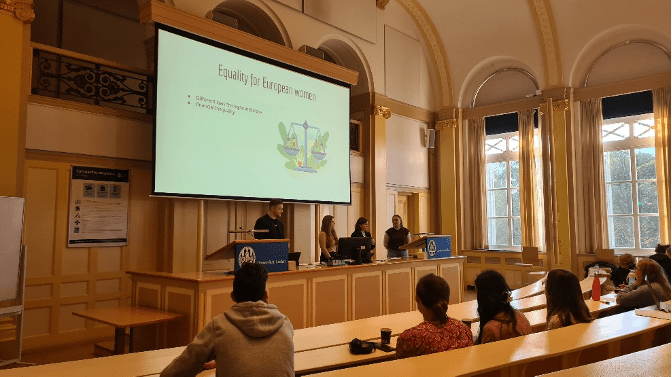
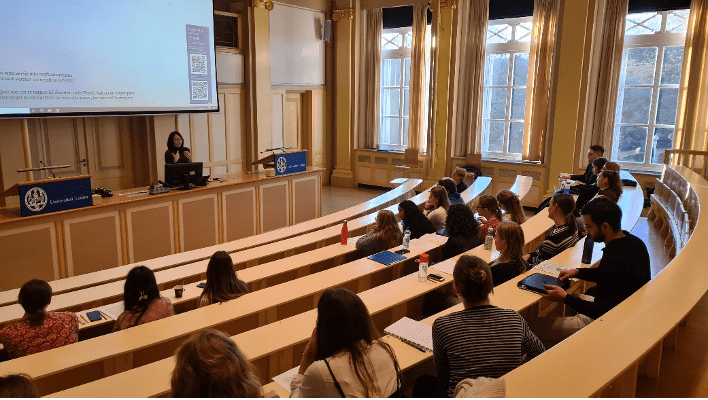
In order to introduce these topics to students, Honours College Law (HC Law) hosts an Honours course at the Law faculty, called ‘Gender, Race, Intersectionality and Law’. In this course, the students learnt some of the histories, theories and challenges of seeking equal justice under the law. With concrete examples focusing on gender and race, they explored the intersections between various aspects of individual identity, national and international legal institutions, politics and law. The students, in groups, have researched on six topics as their case study: (1)Rape law, (2)Abortion law, (3)Child marriage, (4)Female genital mutilation, (5)Racial profiling, and (6)Workplace discrimination. In this Conference Day, taking place in the beautiful Lorentz zaal of Leiden Law School building KOG, they presented their research outcome, engaged in discussions, learnt to give and receive feedback on their research.
From concrete examples focusing on gender and race, students explored the intersections between various aspects of individual identity, national and international legal institutions, politics and law. The students, in groups, have researched on six topics as their case study: Rape law; Abortion law; Child marriage; Female genital mutilation; Racial profiling; and Workplace discrimination.
In ‘Aborting National Abortion Laws’, the first group explored the possibility and advantages of regulating abortion on a European level. By comparing the abortion laws of Poland, the Netherlands, Malta, Italy, they argued that such European regulation benefits women with increased equality, women’s health and safety, as well as legal certainty. In the discussion, we also discussed whether such regulation would be feasible or even desirable, as the abortion discussions at national level are inherently tied to cultural and religious issues.
In ‘A New Definition of Rape Law: Are the Victims Better Off?’, the students addressed the new Dutch rape law and examined to what extend it is going to impact the protection of rape victims. By the survey they conducted themselves with 120 respondents, they found that 20% of them has heard of the new rape definition. ———
In ‘Decolonizing Human Rights: The Dominating West in the Fight against Child Marriage’, they investigated the child marriage practice and relevant national legislation in India, Zimbabwe, and the US, in order to investigate to what extend the ‘universal’ human rights framework poses a challenge in the fight against child marriage. Addressing that there exists a stereotypical victimization of ‘Third World Girls’ as powerless, dependent, victims of patriarchy and male-dominated religions, they argued that the ‘universal’ framework is inherently Western centric, and such framework is problematic because of its exclusionary nature and insensitivity to different perceptions.
In ‘Fighting Female Genital Mutilation: Kenya versus Somalia’, they seek for an explanation on why the two neighboring countries in Africa shows radically different prevalence of FGM practice. They addressed the political, social, economic factors, as well as the recent history of relevant legislation in both countries, which helped us understand why Kenya has succeeded in combating the practice in the last decades, and not Somalia. FGM is one of the culturally sensitive gender inequality issues. In the discussion, they addressed this by questioning whether we can justify the fact the male circumcision is more accepted in the West than the FGM that is much more condemned as a ‘foreign’ practice.
In ‘Dutch Court Allows Ethic Profiling’, they examined the judicial decision made about the racial profiling practice of the Royal Netherlands Marechaussee (Kmar). They worked with the concept of effectiveness and proportionality, and by showing various negative consequences of ethic profiling (e.g., feeling of ‘second-class citizens’ and decreased trust in the state authorities, confirmation bias, reversed deterrence), they concluded that the judge should not have allowed the practice considering the proportionality principle.
In opening ‘Peter’s Privilege: on the implementation of a female quotum in top management and boardroom positions in The Netherlands’, students greeted the audience by introducing their names: they all called themselves ‘Peter’. It comes from an awareness-raising project in which female executives changed their names on LinkedIn to ‘Peter’, pointing out that there are more ‘Peter’, men in the position of management and boardroom. They compared the Dutch legislation of female quotum system with the ones of Germany, France, and Norway. Their conclusion is that enforced (rather than voluntary), two-tier (both management and boardroom position rather than one) regulation with sanction (rather than without sanction) is the most effective to increase the female representation in those positions.
The presentations were highly informative, touched upon topical and important affairs, and were done in creative ways. The discussion was moderated by the course coordinator, and the students and audience engaged in a vibrant, cordial, critical yet constructive manner. Based on the feedback and insights the students gained from the day, they will write a blog post on the topic of their research.
From 17th to 22nd October, I was near Grenoble for a five-days-long writing retreat with Clarisse Anceau – in a house surrounded by French mountains and forests For the five days we enjoyed great talks and walk, a space to focus on writing and thinking, generating new ideas together. We all need such space to enjoy what we are doing and this was one of moments when I felt blessed to be in academia.
There is a lack of understanding of how agency is currently conceptualised and what it actually constitutes in the operationalisation of international human rights instruments. A recent Workshop addressed this issue.
While maximising human agency and freedom is one of the core values of the international human rights project, a subject’s agency is often only recognised when it is considered as the ‘right kind’ by implementers of international human rights norms. The result of this is that many remain on the margins of the human rights praxis. The following sections present the themes that emerged from discussions during the Workshop which was organised by Edward van Daalen of the Centre for Human Rights and Legal Pluralism and Hoko Horii of the Van Vollenhoven Institute.
Molding
When people who do things with their agency which goes against the human rights legal framework, what human rights instruments do is a kind of ‘molding’. Molding is to tell them: ‘You may not be or think of yourself as a free autonomous agent, but this is how we imagine you, and we must move beyond tradition to modernity, to find unconstrained humanity.’ You have to be a subject that the human rights project hypothesises.
Invocations of agency and the ‘need to protect’ the vulnerable are intimately tied to colonial legacies – discourses of rescuing and civilising. Female genital mutilation and the hijab, for instance, are always invoked against a background of culturally foreign practices.
A conflict of values
The recognition of agency becomes difficult when what is advocated for by marginalised groups goes against traditional ideas of ‘progress’. On some level, human rights is a freedom maximising project that is supposed to be minimalistic, but it develops into a pretty thick project that is value-laden.
It is framed as a matter of agency, but the conflict of values is the real problem. Cultural relativism silences us into thinking we can’t say anything because it’s just ‘different’ – here, the discourse of agency is deployed instead. It’s a battle about what the shared morals are.
Paternalism
When we talk about agency as it exists on the margins, there is paternalism. There is a worrying tendency of paternalism under the guise of protecting agency to reintroduce a thick moral conservative agenda.
The impossibility of consent is used as a paternalistic tool. For instance, think about an absolute ban on romantic relationships between professors and students because of power relationships. Such a strict and prohibitionist approach is paternalistic because the less powerful actor in that relationship is basically alienated. They are considered to have no way of making an informed decision.
Defining agency
In the enlightenment model, the progress is to distance ourselves from authority, and to think for ourselves. The ideal of being ‘free/autonomous’ is to be in a perfect condition of information without any kind of power. Based on the idea that we are rational. But such a perfect condition is impossible to achieve. Does the idea of consent only arise when power dynamics are totally stripped? The unrealistic project of pursuing the idealised vision of freedom and autonomy leads to the hyper-legalisation of sexual acts.
There is also a neoliberal angle. When the neoliberal order looks at order through the human lens, which is about organising humans based on market efficiencies. Then there is a focus on children as human capital, and a loss of human capital – which was evident in the discourse of child soldier, for example.
Relationality
We must consider that autonomous decisions are made in a social context. For instance, for some people female genital mutilation is needed in order to be part of their community. Sometimes conceiving rights as relationships helps us to have a better understanding of agency.
One of the participants of the workshop emphasised the importance of recognising collective identity and ‘we-agency’ when trying to understand how social movements overcome internal conflicts. While the ‘I’ perspective is never erased, thinking about the ‘we-agency’ challenges the enlightenment model of moral progress that prescribes exercising autonomous thinking, which remains key to how agency is conceptualised in international human rights law.
Ways forward
What are the alternative ways to conceptualise agency so that it accommodates the diverse and challenging ways that agency exists ‘on the margins’? Here are some ideas that are shared, to be explored.
Amplifying the voices of those with agency with ‘different’ conceptions of progress.
Think of ‘agency’ as the link that transforms an abstract ‘human right’ into an actual ‘human capability’.
A more general account of the relationship between agency and human rights would help the debate. Which types of agency (i.e. social, moral, and political or individual and collective) are relevant to human rights instruments? How is agency distinct from ‘interest’, ‘freedom’ or ‘will’?
For migration policies, one participant proposes to bank on the agency of migrants to go where they can thrive and find their place in the host society. Capacity to be heard in a public debate and a more direct involvement of the concerned groups in the framing of their rights may increase their agency, and the acceptance of the diversity in the ways they exercise it.
Agency and freedom, however framed, are one of the most fundamental questions that have been addressed in social science and philosophies. Human rights and law is another important place of inquiry on this topic, as law can be a constraint for our freedom. However, there is this belief that law (especially human rights law) should and can be emancipatory. We are deeply excited by this project, and are currently working on a Special Issue on InterGentes, composed of short contributions from each participant of the Workshop.
Report on the Workshop is available here under ‘Other Ongoing Research Projects’.

 For the five days we enjoyed great talks and walk, a space to focus on writing and thinking, generating new ideas together. We all need such space to enjoy what we are doing and this was one of moments when I felt blessed to be in academia.


 Hoko Horii